
Let us Help you with you next ICT Project
Fun Promotions !!
No transport cost for all new customers
Already a customer? save points and win super prices.
Our Services
IT Infrastructure
Reliable IT Infrastructure, the core of your companyIT Infrastructure
From PC to Servers,
WiFi, Switches, Storage, vSAN
Virtualisation and much more,…
We manage, install and monitor your intire infrastructure
IT Support and Helpdesk
Your IT problems are our IT problemsIT Support and Helpdesk
Onsite: A technician will handle your problems onsite and solve all your IT problems and any question you may have?Online: Our helpdesk is always ready to solve your IT problem or answer your questions
Fixed price per month.
Security
We help you with the security of your network or companySecurity
Spamfilters, load balancers and web filters
From firewalls to antivirus
Professional Camera Security
Power Security with UPS Systems from Eaton and APC
Cloud Services
Your backup or Servers in the cloud. See all of our servicesCloud Services
Backup as a Service, Disaster recovery
Infrastructure as a Service with VMware or Azure
Office 365, Exchange hosting
Software as a Service
VDS Systems
Work towards your IT for tomorrow.






decommission PSC from vCenter
when its time to decommission a PSC from your vCenter this is how you do it. make sure your vcenter isn't using the PSC your decommissioning. Easiest way to check is via the VMware Web client. vCenter -> Manage -> Settings -> advanced settings search for the key "config.vpxd.soo.admin.uri". This will show you what PSC is being used by vCenter. if needed repoint the vCenter to another PSC within your Site. follow Vmware KB 2113917 shut down the PSC connect to another PSC in your SSO site. (SSH or use the console in case of appliance or log into the windows server) the following command will unregister the PSC cmsso-util unregister --node-pnid "PSC-FQDN" --username administrator@vsphere.local --passwd "vCenter SSO password" remark: on windows server open command prompt as administrator and navigate to "C:\Program Files\VMware\vCenter Server\bin>" tips: for the PSC-FQDN check under Nodes for the correct name: "Home - Administration - system [...]
Reset password for a Windows 10 local account
Password Reset Windows 10 local user account When you forget your password of a local account on windows 10 then you can just do the following procedure. download a Linux live CD/DVD (for example: knoppix live DVD) and burn it on DVD or make a bootable USB disk. change your Bios settings so you can boot from CD or USB. For Lenovo press F1 when you see the lenovo logo. once in the BIOS go to exit and disable "OS optimized Defaults" again on the exit option choose "Load optimal Defaults" Go to "Startup" and change the primary boot Sequence. Make sure DVD and USB boor is above your HD Go to "Security" - "secure boot" and disbale it. Press F10 to save it For HP press F10 when you see the HP logo go to "Advanced - secure boot configuration" choose legacy boot enabled and secure boot disabled" Click [...]
Exchange 2016. Allowing Users to Edit Exchange Groups They Manage
Since exchange 2010 it's not allowed to edit a group in outlook. This has been moved to the ECP, but this means granting a user access to the ECP console. after some reasearch I found this cool article explaining a lot how it works http://blogs.perficient.com/microsoft/2015/04/office-365-allowing-users-to-edit-exchange-groups-they-manage/ I used methode #1 in Active Directory to add "managed by" attribute. After that I used his steps to Create a new “Manage-MyDGs” role from an existing role Remove any commands that allow actions other than updating existing groups Create a new role group and assign it our new role Change the write scope of the role assignment such that it only applies to groups that the user is set as the owner of in Exchange Only trouble I had is that I couldn't remove users from the list in outlook, I could remove them in the ECP console. So after some more research I [...]
Projects
Hosted Exchange 2010 to 2013 (Multi tenant) with VMware vSphere 5.5
Project description
Preparation
This is an overview of the project and not a technical document how to migrate to Exchange 2013. In the past we setup a multi tenant environment with Exchange 2010. At that time there was only resources for 1 physical server, wich was sufficient at the time […]
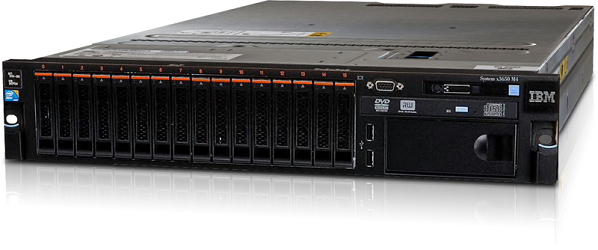
IBM V3700 iSCSI and IBM System x3650 M4
Project description
The Lay-out
We chose this project because we could reduce the cost by selecting iSCSI over fiber
- The environment existed of a mix of Windows 2000, 2003 and 2008 servers.
- Big files and home folders of several GB to 4TB.
- The existing ERP Software had to keep working […]

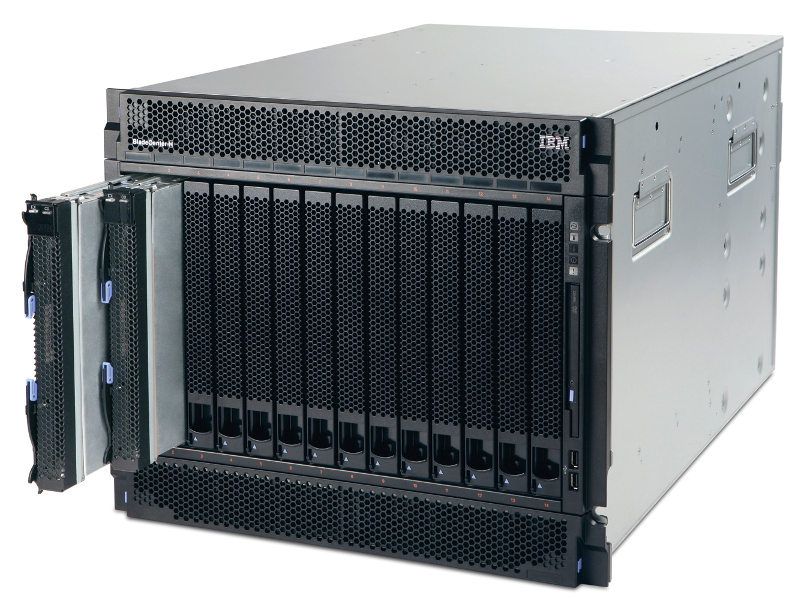
Lenovo/IBM BladeCenter H
Project description
To be honest the racks were full of old server that havent been touch in over 10 to 15 years. So there were big HP server G2 and G4 generation among them, wich made it easy to reclaim so much rack space. Non the less its was […]